Thursday, February 28, 2013

“It looks very much posed”


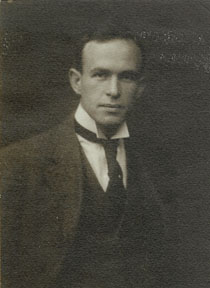
The above photograph, showing Howard Pyle with “The Evacuation of Charlestown” on his easel in his Wilmington studio, has now and then been dated 1897 and 1898.

But 1897 is incorrect because Pyle only started the painting in mid-1898: Frank Schoonover remembered that Pyle (his teacher at the time) was working on it during the Drexel Institute’s first Summer School of Illustration - which officially opened on June 23, 1898:
I recall that Mr. Pyle set up a very poor three-legged easel on the lawn in front of the house at Chadds Ford, and put his canvas on the easel. Miss Ellen Bernard Thompson...was painting something on the lower side of the road, and just beyond her was the Indian painter, Angel DeCora. There were some chairs and books of engravings of Colonial ships of the line out on the porch, and there were also the Pyle children playing around in the yard. The sky was very blue that day, with many floating clouds. Mr. Pyle asked me to fasten the canvas so that it would not shake, so I went back into the house and got the things needed.

Mr. Pyle then sat down on a kitchen chair and started to work under an apple tree, but he had no mahl stick. Then he said, “Frank, I see a fine straight sucker up there - climb up and cut it off.” I did so...

It was amazing to see him do this painting with so many distractions such as the children’s running around and so forth.... The painting has a shadow across the water like the shadow of the lawn, and the sky is as it was that day at Chadds Ford with the drifting clouds making shadows on the uneven lawn, which was much the color of the water in the picture. This was a lesson to all the students to interpret the things around them when painting.
“The Evacuation of Charlestown” was later packed up and hurried off to be photographed and made into a half-tone plate, just in time to appear in Scribner’s Magazine for September 1898. The Delaware Art Museum now owns the original painting (oil on canvas 23.25 x 35.25" - if you’re keeping score).


But back to the above photo: 1898 is probably the wrong date, too. Years ago, looking in a box at the Delaware Art Museum’s library, I saw - I think - two glass-plate negatives made by Cyrus Peter Miller Rumford. There, too, I saw Rumford’s scribbled notes stating that these were “Portraits of Howard Pyle for Home Journal ’99” and (provided I’m reading my own scribbles correctly) it seems that Rumford arrived with his camera at Pyle’s Wilmington studio at 3.00 p.m. one January day in 1899 and took a total of four photos.


Rumford, who had turned 26 that month, was a recent Harvard graduate (Class of 1897) and already a prize-winning photographer. And, apparently, either from his own or Pyle’s initiative he made the photos for an article in the April 1899 issue of the Ladies’ Home Journal, titled “The Journal’s Artists in Their Studios” - but for some reason the magazine chose not to print them.

Pyle’s own opinion of the photos sounds mixed: on February 11, 1899, he dictated the following letter:
Wilmington, Del.

My dear Mr Rumford:

I am very much obliged to you for the photograph of myself in my studio. It looks very much posed, but that is the fault of the subject and not of the photographer. It was very kind of you to remember me.

Once more thanking you,

I am

Very truly yours

Howard Pyle

February eleventh.
I don’t know why Pyle says “the photograph” and not “the photographs” - maybe Rumford only sent a print of what he considered the best. But “very much posed” is about right: these two known photos show a seated Pyle - who usually stood at his easel - stiffly “at work” on the already-finished “Evacuation of Charlestown”.


I should note, too, that Pyle’s letter to Rumford was handwritten by Pyle’s secretary, Anna W. Hoopes, and although it appears to be signed by Pyle, the signature is, in fact, the work of Miss Hoopes as well. In a 1935 talk she explained:
When rushed at the end of the day with correspondence, [Mr. Pyle] often asked me to sign his letters; and I became so proficient at imitating his signature, that he once made me promise not to copy his handwriting, jokingly remarking that sometime I might want to sign his checks.

When Howard Pyle “Struck Pan”


“The little pink finger and the huge black index came to a full stop under this commandment”

“Work is beginning to roll in upon me at last, and at last I think I have ‘struck pan,’” wrote Howard Pyle to his mother on February 28, 1878 - 135 years ago today. “My work is beginning to pay better too and I think before long I shall be able to pay off my debts to father in toto.”

Although I haven’t yet been able to find another use of Pyle’s idiom “struck pan” - it’s clearly a hybrid gold-mining term, somewhere between “struck pay dirt” and “pan out”.

Anyway, after over a year of living in New York, the 24-year-old Pyle had finally found himself making real headway as an illustrator. He credited his “A Wreck in the Offing!” as having “really launched me” - The Book Buyer for October 1888 said of it, “This drawing was published as a double-page engraving in Harper’s Weekly, and brought Mr. Pyle at once into prominence.”

But let’s let Pyle himself explain some of the work that he had been doing soon after his “first success” - and apologies in advance for his unfortunate racial slur:
I have just finished a picture for Harper’s Monthly of an old darky giving a lecture to a naughty little girl. It was quite a success and they are going to put it into the hands of the best engraver in New York City, Mr. Smithwick. They gave me two pictures to do for them in illustration to a most excellent story of modern Spanish life. They are beyond all comparison the best things I have ever done. I don’t think I am as a general rule inclined to be “cock almighty” about my work but for these two designs I can say that they are so far beyond anything I have ever done before that I can hardly realize their being my own work. They are not finished yet, but so far every touch I have put on them has improved them.

“She went by without looking at him”
The first one represents a Spanish caballero standing against the side of a bridge looking after his Dulcinea whom he has mortally offended by a lampoon written in a fit of jealousy. She is “soaring” past him with a scornful expression on her face and he is looking after her in a beseeching way. The scene is early morning and I think I have gotten a real feeling of early sunlight in the picture. I borrowed a Spanish cloak from an artist friend of mine that almost entirely covers the modern European dress and which with the addition of a sombrero gives him quite a picturesque look. I hired a Spanish woman’s costume in which I posed my female model Jenny Watts, a very pretty ladylike girl, and I tell you, she cut quite a shine!

Fermina opens the casket
The story goes on to say that after having thus mortally offended his sweetheart and being for some time unable to regain her love the cavalier finally succeeds by sending her a casket. In the casket was the pen with which he had written, broken; under the pen, a sheet of paper where was written in his blood “Retribution,” and under the paper his right hand. This, of course, “dropped” the girl. A very effective dénouement, I think. The scene I took for illustration was when she is just opening the box, or rather, had just opened it, the horror not yet fully dawned upon her mind. This was Mr. Alden’s suggestion. And I have made an illustration that some of my artist friends say shows not only talent but genius - I only hope it is so. Mr. Abbey says it is one of the best things that have been done in New York illustrating.
By the way, “The little pink finger and the huge black index came to a full stop under this commandment” was engraved, in the end, by Frederick Juengling, not John G. Smithwick, and published in Harper’s Monthly for July 1878. It illustrated “Daddy Will: A Glimpse of Ancient Dixie” by Charles D. Deshler. Pyle’s original black and white gouache painting showed up on the market in 2006, I think. And “She went by without looking at him” and “Fermina opens the casket” illustrated “Manuel Menendez” by Charles Carroll in Harper’s Monthly for August 1878.

Wednesday, February 27, 2013

Howard Pyle: From Idea to Illustration

On Saturday, March 9, 2013, at 11.30 a.m., I’ll be giving a talk entitled “Howard Pyle: From Idea to Illustration” at the Delaware Art Museum in Wilmington. You can register in advance for it here.

Tuesday, February 26, 2013

Gamboling in the Great Game of Human Redemption

Crisis Magazine recently featured an interesting review of - or, rather, an essay on - Howard Pyle’s The Merry Adventures of Robin Hood as a kind of Christian parable. The devout Pyle probably would have approved of this interpretation.

Saturday, February 2, 2013

Howard Pyle and the Groundhog

“According to the tradition of the ‘ground-hog’ the weather should have broken by now, but this time the ‘ground-hog’ was a prophet neither in his own country nor out of it. We read that you also on the other side of the ocean are suffering a like bitter winter and, indeed, the whole earth seems to be girdled by a belt of ice. I suppose that we should take comfort that one is not worse off than ones neighbours but I do not know that that fact makes the thermometer any higher.”
Howard Pyle to Thomas Francis Bayard (in London), February 10, 1895.

Sunday, January 6, 2013

Poor Richard

Howard Pyle drew “Poor Richard” for the programme/menu of the Franklin Inn Club’s celebration of Benjamin Franklin’s 200th birthday held on January 6, 1906, in Philadelphia.

Pyle was a member of the club, but did he attend the party? Maybe not: instead, he might have opted to go to the Century Association’s Twelfth Night at Eagleroost festivities in New York.

Saturday, January 5, 2013

Pyle, Taft, and the Panama Canal

On January 5, 1905, Mr. and Mrs. Howard Pyle attended the Cabinet Dinner at the White House, where they dined on Harlequin Sandwiches, Potage Clear Green Turtle, Curled Celery, Terrapin à la Baltimore, Supreme of Chicken Villeroi with fresh mushrooms, Egyptian Quails à l'Estouffade - among other delicacies - and later stayed over night as guests of President Roosevelt.

Also at the dinner was Secretary of War William Howard Taft. After Taft was elected in 1908, Pyle wrote to congratulate him and said:
...I remember sitting at a small table in the White House with you and Mr. Cadwalader after the Cabinet dinner, and hearing you tell Mr. Cadwalader of your intentions concerning the Panama Canal. What you said to Mr. Cadwalader was said so simply and so unaffectedly that I carried away with me the impression that you were one of the strongest men in the world.
Pyle told others of his encounter with Taft that night - Edward Noble Vallandigham, for one, recalled of his friend Pyle:
He became some years ago an enthusiastic admirer of Mr. Roosevelt, and was several times entertained at the White House. Upon one of these occasions he met Mr. Taft, then of the cabinet, heard him talk of the Panama Canal, and came away deeply impressed with his easy mastery of a great subject. “He seemed,” said Pyle, “as familiar with that vast undertaking as I should be with the laying of a drain in my back yard.”
Pyle’s enthusiasm for Taft - which seems to have been kindled 108 years ago tonight - eventually led him to provide some last minute, but apparently invaluable assistance to Taft’s 1908 campaign.

But more on that another time. Now it’s off to bed for the Pyles, where they can digest the above-mentioned items - as well as their Smithfield Ham Glace (Hot) with Madeira sauce and spinach, their Peaches Melba and their Blue Point Oysters - and brace themselves for breakfast with Theodore Roosevelt.

Friday, January 4, 2013

Frank E. Schoonover - A Long Life in Art

Yes, yet another Pyle-related video to watch. Here, the story of Frank E. Schoonover (1877-1972), one of Howard Pyle’s longest-lived and most devoted students, is told by his three grandchildren, who were interviewed in the Wilmington studio their grandfather used from 1906 on (after Pyle had pushed several “graduates” from his own nest of studios a few blocks away). Home movies and audio recordings of an elderly Schoonover are a nice addition to this documentary - it’s always great to see these folks move around and speak. So take a look. And while you’re there, also poke around the Frank E. Schoonover Fund and the Schoonover Studios sites.

Thursday, January 3, 2013

A Film About Allen Tupper True

Allen Tupper True

Denver-born artist Allen Tupper True (1881-1955) joined Howard Pyle’s class in May 1902 and his abundant letters home are a rich source of information on Pyle and his students and their lives in and around Chadd’s Ford and Wilmington (they’re also a great complement to True’s classmate and studiomate N. C. Wyeth’s letters to his family).

Now (and for some time past, perhaps) an hour-long documentary called “Allen True’s West” is available on Colorado Public Television’s website. The quality isn't great, but a DVD can also be had.

The film showcases True’s later career as a muralist and touches only slightly on the “Pyle years” (and it’s not without its errors: enrollment to the Howard Pyle School of Art - not the “Howard Pyle School of Illustration Art” - wasn’t limited “to only twelve students” - and Pyle resigned from McClure’s Magazine before the plan to have True join him as an assistant could be realized. Also, it’s implied that Pyle took a cut of the fees his students received for published work, which is incorrect.) Even so, it’s well worth watching and learning more about True’s life and art, which have gotten relatively little attention.

George Harding, Gordon McCouch, Thonton Oakley, N. C. Wyeth, Allen True, and (seated) Howard Pyle, circa 1903

Wednesday, January 2, 2013

In Praise of Cass Gilbert

Cass Gilbert, circa 1907 (via the Minnesota Historical Society)


“Your own life has been a life of success gratifying to all your friends, and the gratification they feel is enhanced a hundred-fold by the consciousness that that success has been well earned by a man who deserves to possess it. For such large hearts and generous spirits as that which you possess not only make the world a brighter and a happier place in which to dwell, but also leave their marks behind them in works of beauty and of grace.”
Howard Pyle to Cass Gilbert, January 2, 1907

Tuesday, January 1, 2013

Raising the First National Flag, January 1, 1776

“Raising the First American Flag, January 1, 1776” by C. O. DeLand

No, this isn’t a long-lost Howard Pyle: it’s by Clyde Osmer DeLand, who painted it under Pyle’s supervision at the Drexel Institute in the fall of 1897. As Pyle explained in a January 1898 description of his School of Illustration:
...I hold a “Composition Class” every week, some of the compositions submitted being of an excellence sufficient to admit their being used in pictorial form - page and double-page cuts - by the more important illustrated periodicals....

To cultivate independence, the compositions made by the pupils are from time to time submitted to some leading illustrated periodical or newspaper, and if accepted are worked up into a picture with only verbal criticism upon my part.
Such was the case with one of DeLand’s drawings which, after meeting with Pyle’s approval, was submitted to and approved by Harper’s Weekly. DeLand then got an official order for the picture and started painting.

Although it’s not a very well-known aspect of his mentoring, Pyle encouraged his students to write as well as illustrate, just as he had done with great success. Some, but not many, followed his advice, including DeLand who supplied his own text for “Raising the First American Flag, January 1, 1776” in the January 1, 1898, issue of Harper’s Weekly. In fact, it’s possible that DeLand (who turned 25 when the magazine was on the newsstands) was the first Pyle student to have his own illustrated text published. Here’s what he wrote:

THE FIRST NATIONAL FLAG
by Clyde O. Deland

Prospect Hill (known also as Mount Pisgah) was the strongest fortification of the American army during the siege of Boston, and it was here that the Union flag was unfurled for the first time January 1, 1776, the day on which the new Continental army was organized.

Upon that day copies of the King’s speech at the opening of Parliament had been sent from Boston by General Howe to Washington. The speech was one better fitted to arouse opposition than submission to the English throne. It stated that the British nation was too spirited and powerful to give up those colonies which had been protected for so many years with “much expense of blood and treasure”; that both its army and navy had been strengthened, and that negotiations for foreign aid were already entered into. The English authorities entertained great hopes of the salutary effects of this message from the throne to the rebellious Americans. Accordingly the hoisting of the Union flag and the discharge of thirteen guns that saluted it were hailed with great delight by the British officers, who supposed it to be a token of submission to the crown.

Referring to these circumstances, Washington, in a letter to Joseph Reed, dated January 4, 1776, said: “The speech I send you. A volume of them were sent out by the Boston gentry, and, farcical enough, we gave great joy to them without knowing or intending it. For on that day - the day which gave being to our new army, but before the proclamation came to hand - we had hoisted the Union flag, in compliment to the united colonies. But, behold! it was received in Boston as a token of the deep impression the speech made upon us, and as a signal of submission. So we hear by a person out of Boston last night. By this time, I presume, they begin to think it strange that we have not made a formal surrender of our lines.”

The Annual Register of 1776 gives a more detailed description of the flag. It says, “So great was the rage and indignation [of the Americans] that they burned the speech and changed their colors from a plain red ground, which they had hitherto used, to a flag with thirteen stripes, as a symbol of the number and the union of the colonies.”

Previous to this, so-called “Union flags” were sometimes displayed, but were merely British standards with the legend “Liberty and Property,” or “Liberty and Union,” set upon the field as emblems of colonial rights and principles.

In 1855 the historian Benson J. Lossing discovered a contemporary colored drawing that for the first time rendered an authentic presentment of the flag. It was a sketch of the Royal Savage (Arnold’s flag vessel on Lake Champlain in the battle of October, 1776). An ensign was depicted flying at the mast-head. This flag displayed the British union - the combined crosses of St. George and St. Andrew - in the usual upper corner, but the field had been changed from the solid red into alternate stripes of red and white. It was doubtless the union jack in the corner of the flag hoisted at Cambridge that caused the English to misinterpret it - to suppose that the Americans intended to submit once more to the rule of George the Third.

The colonial Union flag of thirteen stripes was also displayed in Pennsylvania during the year. A letter describing the departure of the American fleet under Admiral Hopkins from Philadelphia, in February, says it sailed “amidst the acclamations of thousands assembled on the joyful occasion, under display of a Union flag, with thirteen stripes in the field, emblematical of the thirteen united colonies.”

After allegiance to the British crown had been thrown off, the jack bearing the crosses of St. George and St. Andrew became inappropriate, and on the 14th of June, 1777, the Continental Congress passed the following resolution:

Resolved, That the flag of the United States be thirteen stripes, alternate red and white; that the union be thirteen stars, white, on a blue field, representing a new constellation.

The illustration represents the ceremony of raising the new colonial flag. The scene depicts the interior of the fortifications on Prospect Hill, looking southeast across the Charles River toward Bartons Point in Boston.

The colonial troops, while much better organized than ever before, were still without a regular uniform, the occasional buckskin hunting dress of the Southern riflemen or of the frontiersmen being in picturesque contrast to the bucolic homespun of the New England minute-men.

Washington’s uniform is described in a letter written July 20, 1775, thus: “His dress is a blue coat with buff-colored facings, a rich epaulette on each shoulder, buff underdress, and an elegant small sword; a black cockade in his hat.”

Three of the cannon used at this time are now planted upon Cambridge’s common. They date from the reign of George the Second.

The profile of Boston, it may be said, has been rendered as carefully as possible from contemporary drawings and prints of the period. Edes & Gills North American for 1770 contains an engraving by Paul Revere, entitled “Landing of the Troops in Boston, 1768,” which gives an approximate view of that city, with its beacon, towers, and spires. Besides this, Lieutenant Williams of the Royal Welsh Fusileers, while stationed in Boston under General Gage, made a panoramic view in colors of the country surrounding the city. A copy of this drawing is in the cabinet of the Massachusetts Historical Society.

The vessel in the middle distance represents one of the British war-ships guarding the approaches to the city.

Note: for some reason, when I first posted this I titled DeLand’s picture “Raising the First National Flag, January 1, 1776” but the correct title should be “Raising the First American Flag, January 1, 1776”.